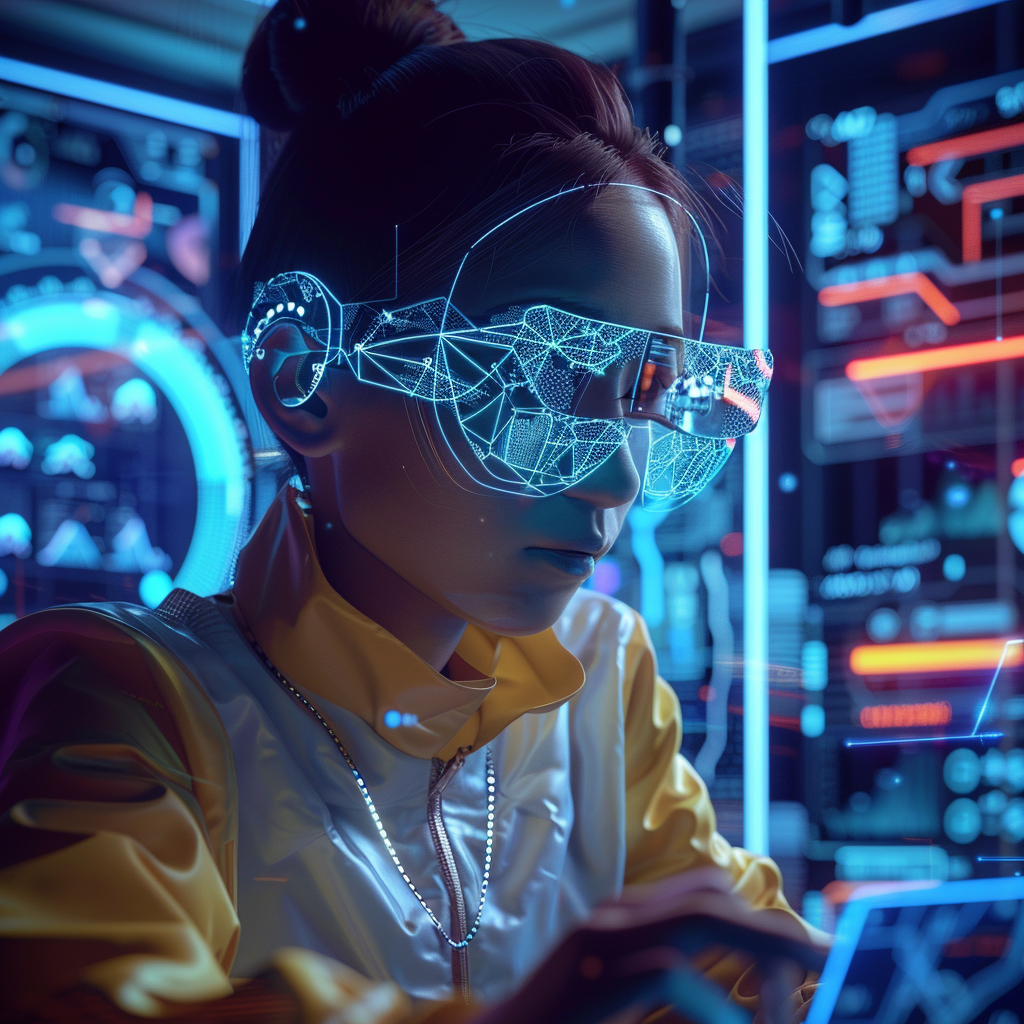
In an era where artificial intelligence permeates every aspect of our lives, the ability to discern the right questions to ask our AI agents is tantamount to wielding a strategic superpower. AI has simplified the process of obtaining comprehensive answers, provided you can formulate the appropriate queries for the AI to analyze and suggest the most effective actions. As these algorithms advance, marketing professionals who effectively tap into these knowledge factories will rapidly outpace their peers.
The effectiveness of your AI inquiries and the skill with which you employ probing techniques to push the AI systems to generate robust recommendations can greatly enhance your marketing strategy. Collaborating with AI will set you apart from others who may be slow or even resistant to embracing AI in their workflows due to fear or a belief that they can outsmart or outthink the AI systems.
The prospect of AI systems taking over creative agencies and replacing marketing roles is complex, as creativity is inherently human. However, as AI tools become more sophisticated, they will greatly accelerate and enhance the creative process. AI provides easy access to data-driven insights, real-time strategic planning, brainstorming creative options, and can automate many routine marketing tasks. This symbiosis between human creativity and AI’s analytical thinking prowess will redefine the creative landscape, empowering and elevating those who can harness the strengths of both.
How long until AI enables the existence of a one-person marketing organization? I truly believe we are there now. A highly experienced Chief Marketing Officer (CMO) equipped with AI agents could function as a multifaceted marketing organization today.
We will shortly see the following developments unfold:
An experienced Chief Marketing Officer (CMO), equipped with sophisticated AI agents, orchestrates entire campaigns that once required a team of more than 20 marketers. With AI agents at their disposal, an AI-enabled CMO can analyze global market trends in real-time, making data-driven decisions that keep their company at the forefront of innovation.
The AI-enabled CMO can now unlock personalized marketing at scale, delivering tailored messages to millions of consumers as if they were crafted individually for each prospect. Empowered with AI, the CMO might launch a product in multiple international markets simultaneously, with AI agents fine-tuning the marketing mix for each locale.
The CMO’s AI agents predict customer behaviors, optimize pricing strategies, and automate media buying, all while the CMO focuses on creative and strategic leadership.
In the age of everyone having an AI agency at their disposal, the need to hire deep human functional expertise is going to be greatly diminished. The future looks very bright for the curious generalist who can pose the right questions to their AI systems, prompting it to handle the detailed tasks necessary to execute with the precision of a deep subject matter expert.
The marketer of the future will be hired based on their ability to command and harness the power of AI agents. Like a modern-day Mozart, those who can best orchestrate AI systems to do their bidding will be in high demand.
The new AI toolset does pose some interesting future scenarios. Will people be able to bring their own AI agents to their employer to enhance their work outputs and then leave for another company, taking those AI systems with them without repercussion from IP infringements? New intellectual property protections need to be established to delineate what belongs to the creator and their AI systems versus the corporation.
Furthermore, in the AI economy, it might be more advantageous for the skilled AI-enabled creator to contract with companies versus pursuing traditional forms of employment, as the AI-savvy creative can scale their impact across many companies versus being tied to just one corporation.
As we grapple with these questions, it’s clear that the integration of AI into the workforce will necessitate a reevaluation of traditional employment models and it will disrupt how not only marketing is performed, but all job functions will be augmented by the power of AI systems and workflows.
The fluidity of AI advancements and the portability and broad access to AI tools could give rise to a new class of digital super nomads—skilled professionals who move from project to project, taking their proprietary AI workforce with them from job to job. This shift could lead to a gig economy on steroids, where the value of one’s expertise is not just in their knowledge, but in the sophistication and uniqueness of the AI systems they’ve trained to do jobs at scale based on their human experiences.
Have you started building and training your AI workforce yet?

 Down the Rabbit Hole...
Leave a comment